All posts by admin

AADHAR CARD – PAN CARD – INCOME TAX RETURN

Income Tax return filing for Financial year 2016-17 has begun. Department has already issued  most of the Income Tax forms with various changes.

Let us discuss one of the important amendment brought, regarding filing of Income Tax Return.

AADHAR CARD or unique identification initiative by Government of India, has reached and connected to greater mass. As per data issued by government, approximately, 114 crore Aadhar cards have been issued till now. Most of the citizens or assessees earning taxable income are having the aadhar card. Government gave option to quote Aadhar card in Income Tax returns 2 years ago. But assessees filing returns did not show much interest in that and not mentioned Aadhar number in returns.

Now government is moving steps ahead to link details with Aadhar card, in fight against black money. In Finance Bill 2017, government has made seeding of PAN card with Aadhar card mandatory to file the Income Tax Return after 1st July.

If you have names with different spelling or date of birth is different in Aadhar card and PAN Card then it is the right time to get either of the 2 updated. Because Name, Gender and Date of Birth should match at both the places, else seeding will not be successful.

It is better to look after these matters now rather than getting into hassle in July.

If your details on PAN Card are incorrect then you have to either apply online through TIN-NSDL website.

But if your Aadhar Card details are incorrect then either visit UIDAI website. or the nearest Aadhar Enrolment centre.

Aadhar


BUDGET 2017: HIGHLIGHTS FOR START-UPS

The union budget 2017-18, laid down by Finance Minister Mr. Arun Jaitley, on the 1st of February, had several reforms for the growing sector of the economy i.e., the start-ups. After the launch of the Start-up India Project by the Prime Minister last year, the budget also introduced several relaxing norms for the start-ups. This year’s Budget has turned out to be in line with government’s vision and policies. It made several crucial announcements impacting start-ups directly and indirectly.The budget laid down measures that could provide relief to start-ups. The most significant points were:


  1. As a relief to start-ups, the Government proposed to extend the time period for availing tax benefit for three years in the first seven years of existence instead of three years out of first five years, a move that will allow new ventures to extract full benefit of the permitted deductions.


  1. For the purpose of carry forward of losses in start-ups, the condition of continuous holding of 51 per cent of voting rights has been relaxed. However, this is subject to the condition that the holding of the original promoter/promoters continues.


  1. In order to allow companies to use MAT(Minimum Alternate Tax) credit in future years, it was proposed to allow carry forward of MAT up to a period of 15 years instead of 10 years.


  1. Besides, the Budget proposed to reduce the income tax rate for smaller companies with annual turnover up to Rs. 50 crore to 25 per cent, in order to make micro, small and medium enterprises (MSMEs) more viable and also to encourage firms to migrate to company format and hence encouraging more start-ups to come forward.

START-UP INDIA –A GOVERNMENT INITIATIVE

Start-up India campaign is based on an action plan aimed at promoting bank financing for start-up ventures to boost entrepreneurship and encourage start-ups with jobs creation. The campaign was first announced by Prime Minister Narendra Modi on 15th August 2015. It is focused on to restrict hindrances like land permissions, foreign investment proposal, environmental clearances etc. which are the major problems faced by people while starting a venture. Start-up India was organized by Department of Industrial Policy and Promotion According to the campaign a start-up is an entity that is headquartered in India, was started less than five years ago and has an annual turnover less than ₹25 crore. Further On January 16, Prime Minister Narendra Modi unveiled a 16-point action plan for start-up enterprises in India. He also announced a self-certification scheme related to nine labour and environment laws. He also said that there would be no inspection of the enterprises during the first three years of the operation. The main focus of the campaign is to provide the following facilities for the growth of start-ups:

  1. Self-certification: The start-ups will adopt self-certification to reduce the regulatory liabilities. The self-certification will apply to laws including payment of gratuity, labour contract, provident fund management, water and air pollution acts.
  2. Start-up India hub: An all-India hub will be created as a single contact point for start-up foundations in India, which will help the entrepreneurs to exchange knowledge and access financial aid.
  3. Register through app: An online portal, in the shape of a mobile application, will be launched to help start-up founders to easily register. The app is scheduled to be launched on April 1.
  4. Patent protection: A fast-track system for patent examination at lower costs is being conceptualised by the central government. The system will promote awareness and adoption of the Intellectual Property Rights (IPRs) by the start-up foundations.
  5. Rs. 10,000 crore fund: The government will develop a fund with an initial corpus of Rs 2,500 crore and a total corpus of Rs 10,000 crore over four years, to support upcoming start-up enterprises.
  6. National Credit Guarantee Trust Company: A National Credit Guarantee Trust Company (NCGTC) is being conceptualised with a budget of Rs 500 crore per year for the next four years to support the flow of funds to start-ups.
  7. No Capital Gains Tax: At present, investments by venture capital funds are exempt from the Capital Gains Tax. The same policy is being implemented on primary-level investments in start-ups.
  8. No Income Tax for three years: Start-ups would not pay Income Tax for three years. This policy would revolutionise the pace with which start-ups would grow in the future.
  9. Tax exemption for investments of higher value: In case of an investment of higher value than the market price, it will be exempt from paying tax
  10. Building entrepreneurs: Innovation-related study plans for students in over 5 lakh schools. Besides, there will also be an annual incubator grand challenge to develop world class incubators.
  11. Atal Innovation Mission: The Atal Innovation Mission will be launched to boost innovation and encourage talented youths. The government will introduce innovation-related programmes for students in over 5 lakh schools.
  12. Setting up incubators: A private-public partnership model is being considered for 35 new incubators and 31 innovation centres at national institutes.
  13. Legal support: A panel of facilitators will provide legal support and assistance in submitting patent applications and other official documents.
  14. Rebate: A rebate amount of 80 percent of the total value will be provided to the entrepreneurs on filing patent applications.
  15. Easy rules: Norms of public procurement and rules of trading have been simplified for the start-ups.
  16. Faster exit: If a start-up fails, the government will also assist the entrepreneurs to find suitable solutions for their problems. If they fail again, the government will provide an easy way out.

LLP, PRIVATE LIMITED COMPANY & OPC

Benefits of Incorporating a LIMITED LIABILITY PARTNERSHIP/PRIVATE LIMITED COMPANY/ONE PERSON COMPANY


A Limited Liability Partnership (LLP) is a partnership firm in which some or all partners (depending on the jurisdiction) have limited liabilities. It therefore exhibits elements of partnerships and corporations. In an LLP, one partner is not responsible or liable for another partner’s misconduct or negligence. Section 2(62) of the Act, defines a “One Person Company” as a company which has only one person as a member. OPC is a Private Limited Company with only 1 shareholder, similar to a Proprietorship firm, where firm is owned and managed by an individual. A private limited company, is a type of privately held business entity. This type of business entity limits owner liability to their shares, limits the number of shareholders to 200, and restricts shareholders from publicly trading shares. All three of the above are registered under the Ministry of Corporate Affairs. And all these entities are incorporated and registered under respective laws and are distinct from their shareholders/owners.


Raising Capital

Incorporate your business for investment opportunities. Whereas sole proprietorships and standard partnerships are limited as to how they can raise capital for their business, a corporation can raise capital through selling of corporate stock, or interest, in the company. Investors are more readily attracted to a business opportunity where their exposure to liability is at a minimum. Today, Angel Investors or Venture Capitalists or other investors prefer investing in an incorporated entity, to feel safe and assured while investing in any new business.


Credibility

Credibility is another benefit attached to an entity that is incorporated. Customers and other businesses usually feel more secure engaging in transactions with a corporate legal entity because it instills a feeling of confidence in the company. For investors and lenders to a business, it gives them knowledge that their investment assets are afforded better legal protections.


Perpetual Duration

The incorporated business has perpetual duration unless stated otherwise in the articles of incorporation. This unlimited life allows the entity to continue to exist and conduct business, even following the untimely death of an owner, or the decision by individual owners to discontinue their stake in the entity.


Liability Protection

In order to enjoy maximum liability protection from lawsuits, the company or corporation must be established, operated, and maintained properly, with all of the “operating formalities” properly implemented and adhered to. Since the shareholders are not personally responsible for the corporation’s obligations, they can be protected from corporate litigation. Thus, if the company is involved in a lawsuit, the shareholders’ personal homes or assets would not be at risk.


Tax Savings

Incorporate your business for tax benefits. There are substantial advantages, and savings, available to an incorporated business. One can also write off all his medical expenses, including prescriptions, through his corporation and one is able to write off 100% of his insurance premiums versus the mere 30% write-off available to partnerships or sole proprietorships. These are just a glimpse of the types of advantages available by establishing your company as a corporation.

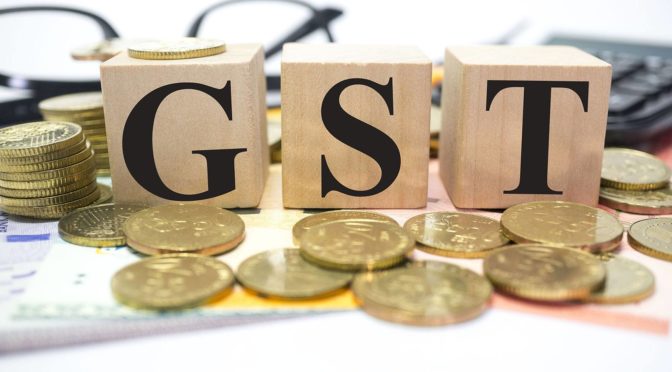
GST – GOODS AND SERVICE TAX

GST & ITS BENEFITS

GST is basically an indirect tax that brings taxes imposed on goods and services, on manufacture, sale and consumption of goods and on supply of services, under a single domain at the national level. In the present system, taxes are levied separately on goods and services. The GST is a consolidated tax based on a uniform rate of tax fixed for both goods and services and it is multiple point taxation system, but final burden falls on end consumer.

Continue reading GST – GOODS AND SERVICE TAX